
More Than Our Stories: How to Engage Patient Advocates the Right Way
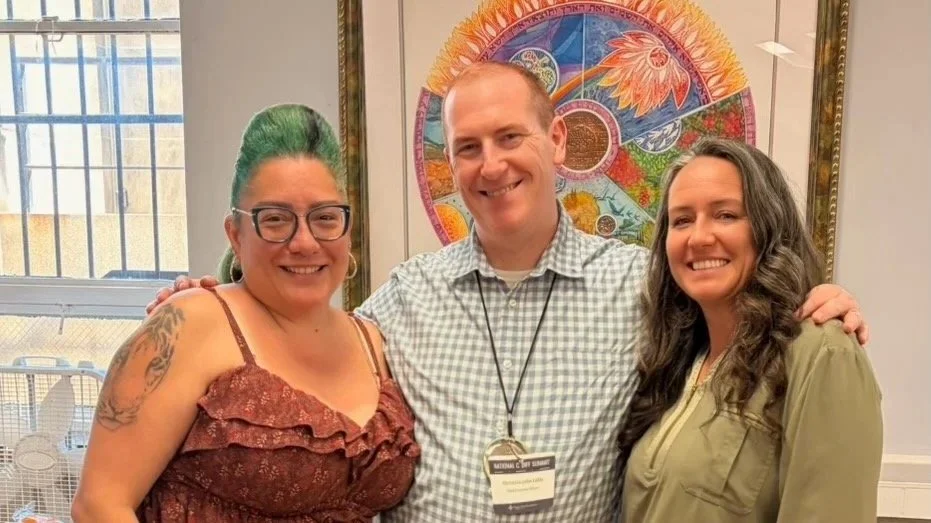
Christian with C. diff Advocates Blanca and Rose
"So, tell me what happened to your mother."
I've been asked some version of that question thousands of times since losing my mother, Peggy, to a Clostridioides difficile infection (C. diff) in April 2010. Sixteen years later, I've told her story to conference rooms, congressional offices, newsrooms, and classrooms. Sometimes telling it reinforces how much I loved her. Sometimes it drops me right back into the white-hot rage I felt the year she died. I still consider it a sacred duty, both to honor who she was and to make sure her death is not in vain.
I wrote about this back in 2021, when I first laid out some ground rules for organizations that want to engage patient advocates like me. Since then, patient engagement has only gotten more central to how healthcare organizations, pharma and device companies, and health systems do business. Patient advisory councils are now standard practice at major hospitals. Pharma companies have built entire patient engagement departments. Health equity initiatives increasingly (and rightly) look to patients and family members as a check on blind spots.
That's real progress. But the fundamentals of doing this well and respectfully haven't changed much. If anything, as patient engagement has scaled up and become more professionalized, including a rise in for-profit patient advocacy services, the risk of treating advocates as a resource to extract rather than a partner to build with has also grown.
So, here's an updated version of that guidance, for healthcare workers, hospital administrators, journalists, nonprofit leaders, pharma and device teams, and anyone else who wants to invite a patient advocate to share their story or collaborate on a project.
Do your homework
If an advocate is established enough to be on your radar, their story is almost certainly public already. Read it before you reach out. Don't open a conversation with "tell me what happened." Reliving harm or loss takes an emotional toll every single time, and asking someone to perform that labor for you before you've even confirmed the engagement is a bad first impression.
Don't ask invasive questions, and don't let your audience ask them either
Sharing a story like mine requires real vulnerability. Advocates choose what personal details to disclose, whether that's the graphic specifics of the harm, their emotional state afterward, or the therapy, legal action, or other steps they took to heal. Unless we've specifically invited it, don't ask about our families, our marriages, our kids. Medical harm ripples outward. Respect the privacy of the people who weren't in the room.
Don't expect tears, and don't assume their absence means detachment
I rarely cry when I tell my mother's story. That's partly her personality, partly a decade of public speaking. I still cry plenty, just usually not on stage. Some advocates cry every time, calmly or angrily, expectedly or not. None of these reactions is more "authentic" than another, so don't read stoicism as a lack of feeling or tears as a sign someone can't handle the platform.
Do be prepared for tears anyway
Have tissues and water on hand. Build a pause into the run of show. Let people compose themselves without an audience staring them down. This is a two-minute accommodation that costs you nothing and can matter enormously to the person on stage.
Don't ask advocates to front travel costs
More than a third of American households don't have $1,000 set aside for an emergency, and that number is worse for people who've experienced a serious illness, injury, or medical harm, many of whom have lost income or are living on disability. Cover the flight, the hotel, and incidentals directly, or pay in advance. Don't ask someone who may already be financially strained to float a plane ticket and wait for reimbursement.
Do pay us
I spoke at professional associations and quality improvement conferences for five years before I ever asked to be paid. I wasn't doing it for the money at the time, but every hour I spent preparing or traveling was an hour I wasn't spending running the Peggy Lillis Foundation. That time has real value, and it should be compensated the same way you'd compensate any other expert you bring in.
A few reasons this still matters in 2026:
Diversity. Medical harm touches every demographic, but structural racism, sexism, and classism mean patient advocacy still skews toward college-educated white professionals who can afford to volunteer their time. Paying advocates is one of the more direct ways to open the field to people from marginalized communities, who are more likely to be harmed and less likely to have the financial cushion to advocate for free.
Disparate benefits. Continuing education credits and resume lines are real compensation for a lot of healthcare speakers. They're not compensation for advocates. If the intangible benefits don't apply to your speaker, the honorarium needs to.
Economic reality. Wrongful death and medical harm cases remain difficult to litigate successfully in much of the country, and "tort reform" caps on damages have made it harder still for many families to find an attorney willing to take a case. For a lot of advocates, speaking fees and consulting work are a meaningful part of how they've rebuilt financial stability after a loss that was never their fault.
Don't treat compensation as a one-time favor
This one's new since 2021. As more organizations formalize patient engagement, I'm seeing more one-off honoraria and fewer ongoing relationships. A single paid talk is better than nothing, but if you're building a patient advisory board, a long-term collaboration, or a recurring speaker series, treat advocates the way you'd treat any other contracted expert: with a scope of work, a fair rate, and a real seat at the table for the decisions their input is supposed to shape.
Don't reduce us to our story
Patient advocates have a lot more to offer than the worst day of our lives. We come from every profession imaginable. In my years doing this work, I've met HVAC technicians, nurses, chemists, data infrastructure experts, x-ray techs, pharmacists, schoolteachers, law professors, and hairstylists who are also self-taught experts on healthcare policy, regulatory affairs, peer support, and navigating a broken system. That expertise can and should inform every part of your organization's work, not just the emotional opening of your conference. Not every advocate wants to engage beyond telling their story, and that's fine. But don't assume the story is all we have to give.
Albert Einstein said, "We cannot solve our problems with the same level of thinking that created them." Patients and family members play a critical role in identifying gaps and blind spots in healthcare and in building solutions to close them. That only works if organizations engage with us as more than our stories.
How CJLillis Consulting can help
Building a patient engagement program that does right by advocates and delivers real value to your organization isn't something most teams have bandwidth to figure out from scratch. I've spent more than sixteen years on both sides of this relationship: as the advocate being asked to share, and as the nonprofit leader building programs that engage advocates well.
CJLillis Consulting works with healthcare organizations, pharma and med device companies, health systems, and nonprofits to design and manage patient engagement programs that are ethical, sustainable, and genuinely useful, from compensation frameworks and advisory board structures to speaker engagement and program strategy. If you're building something new or want a candid assessment of what you've already got, I'd welcome the conversation. Reach out at christian@christianjohnlillis.com to talk through what your organization needs.